


What is Fascia? Connective tissue in a system with no beginning & no end
What is Fascia? New research shows that it is more than the layer around the muscles. It is a network without beginning or end, from the skin, through the entire body, to the smallest cell.
- 01Stretch after rest — fascia stiffens when you stay still, just like in cats and children
- 02Fascia contains six times more neurons than muscles, making it a major source of pain signals
- 03A foot injury can shift load to the knee, hip, or lumbar spine through fascial compensation
- 04Inflamed fascia creates a vicious cycle — restricted fluid flow slows recovery and amplifies pain
- 05Add mobility and agility training to your routine to support fascial health long-term
What is Fascia? Connective tissue in a system with no beginning & no end
- Have you heard about connective tissue? You know that thin layer around our muscles?
- New research shows that the connective tissue is more than that. It is a network without beginning or end, from the skin, through the entire body, to the smallest cell.
- Fascia research deepens our knowledge of the body – and the results are incredibly fascinating.

Recent research changes our views on aches and pains
Figuratively speaking, every part of the body is enclosed in thin bags, known as connective tissue. These bags are in turn linked to each other in an extensive network, serving as the body’s backbone and keeping all parts in place.
The fascia has a vital importance for the slightest muscle movement, but also works when we remain still, as the immune system uses the network to keep us healthy. Additionally the fascia works to reduce pain during an accident. If you, for example, hurt your foot the body compensates by means of the fascia so that a portion of the blast is concentrated to the knee, thigh and sometimes the hip and lumbar spine. The compensation and the realization that everything is linked together becomes particularly interesting when you look at what happens during lock-ups and inflammation in the fascia.
Fascia is a network of connective tissue, without beginning or end, and it envelopes almost everything in the body – from muscles and the skeleton, to organs and cells.
Imagine the Fascia as a web of thousands of thin sewing threads that work alongside each other. If they stick together, which happens when we rest, problems may occur. To a certain level, the body can handle it, but not always.
If you look at a cat or a small child, they always stretch after they rest. Why?
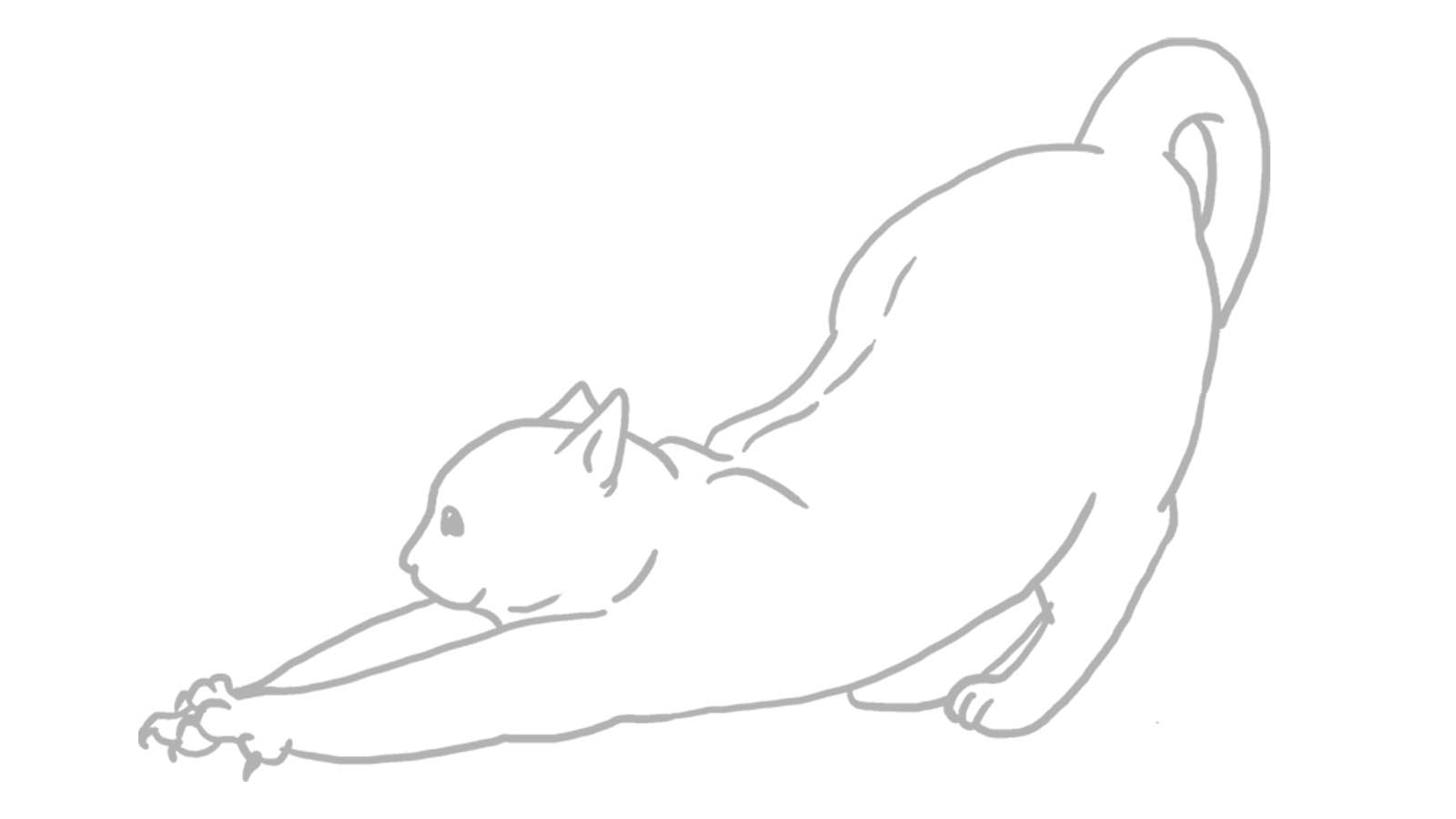
Fascia that is stuck together affects mobility, and since there are six times more neurons in the Fascia than in muscles, lock-ups in the Fascia can be linked to pain in the lower back (among many other common afflictions). A “sick” fascia quickly becomes a vicious circle. Inflammation occurs, the flow of fluid and the immune system is affected – and the pain itself makes recovery more difficult.
Knowledge of the Fascia also affects how we look at training and exercise. In the martial arts they have for a long time, consciously or unconsciously, trained in a way that benefits the Fascia’s functionality. There are numerous examples of footballers who used solely martial arts or yoga as adjunct training and had long careers with few injuries. There is a reason that the German world champions in soccer focuses their rehab around the fascia.
Perhaps we should simply take after cats and children, stretch our legs and train agility and mobility. But above all, we should take to heart in the latest knowledge about how our bodies work.
The story behind how new research changes the way we look at pain
*By Axel Bohlin Founder & Editor, The Fascia Guide*
- Have you heard about connective tissue?
- ArticleFascia: New research changes the way we look at pain
From Newton, to Einstein, to the new wildfire of Fascia Research. How do we understand things from a different perspective?
- ArticleFrequently Asked Questions about Fascia
90 questions and answers — written by Camilla Ranje Nordin
- ArticleInflammation in Fascia causes pain – new discoveries presented in Stockholm
Dr Heike Jäger, Professor Karl Arfors and innovator Hans Bohlin presented the latest research regarding Fascia, inflammation and Fascia treatment in Stockholm, May 2017.
- Ep. 00101. Why Fascia?
The first episode of the English podcast “The Fascia Guide”. The Fascia Guide is a podcast about the living body, about new research and a new perspective on health, pain and what…
- Ep. 01212. How seeing the living body changes everything we thought we knew – with Jean-Claude Guimberteau, MD
The episode was first published on the Swedish podcast Fasciaguiden on May 26, 2025. In this episode, we meet the French surgeon Jean-Claude Guimberteau, who has spent more than 3…