

What is Biotensegrity? Interview with Dr. Stephen Levin
Exclusive interview with Dr Stephen Levin, the worlds leading expert on Biotensegrity, at the Fascia Research Congress 2015.
- 01Bones float within a body-wide tension network — they are not stacked like building blocks
- 02Stiffening one muscle in a tensegrity system stiffens the entire structure simultaneously
- 03Fascia is the primary tension network that connects cells all the way up to the whole organism
- 04Lever-based body mechanics fail to explain quadrupeds, dinosaurs, or movement in zero gravity — tensegrity does
- 05Biotensegrity distributes load across the whole body, eliminating the crushing forces lever models predict
What is Biotensegrity? Interview with Dr. Stephen Levin
Transcription of the interview
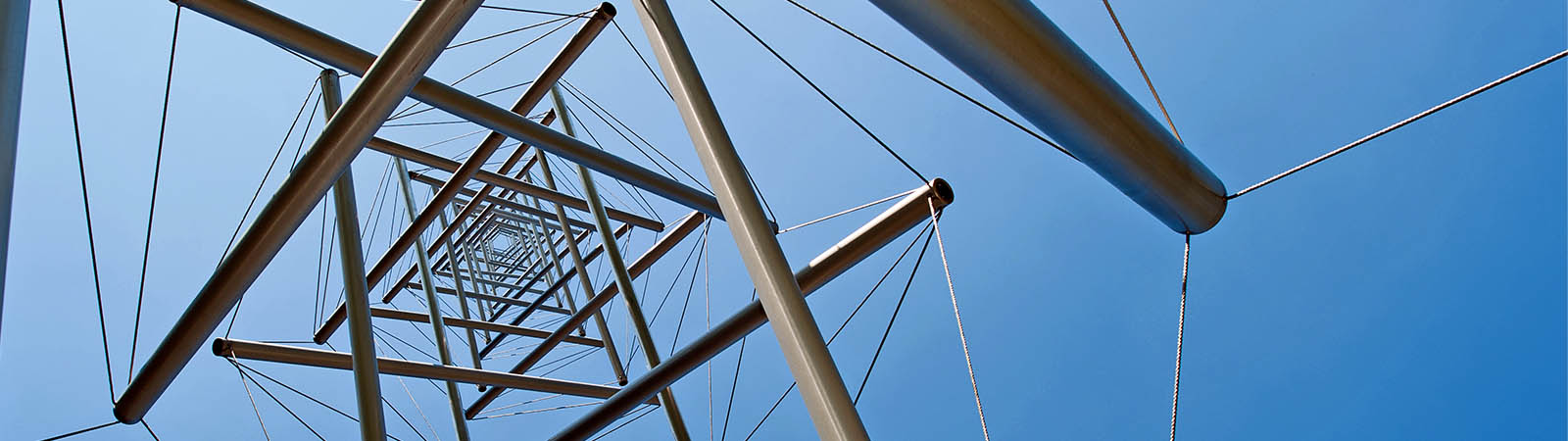
My name is Stephen Levin, I’m an orthopedic surgeon. I was in practice for 50 years. 40 years ago I developed a concept based on Kenneth Snelson and Buckminster Fullers work on tensegrity.
And the simplest way to explain it to you is the present concept of the body is based on a wagon wheel model, where you are vaulting from spoke to spoke and then you have a compressive load and in each vault the spoke becomes a column, a solid column. In a bicycle wheel, all the spokes are in tension, and you’re hanging by this tension element and the compression elements like the hub and the rim of the wheel are floating within this tension network.
So we’ve turned the body inside out in a sense, which means your bones are enmeshed in this very complex tension network and are floating there. And this way, in this model you completely eliminate sheer and moments that you only have tension and compression, which makes it much easier and much more efficient and much less pressure… It distributes the whole thing through the whole body, so that any loading at any time covers the whole body.
It’s a paradigm shift in if you’re thinking of body loading, it required tremendous amounts of loads and calculations to lift anything, it would crush your spine. Calculated loads and lifting a heavy weight would crush even the strongest weight lifter’s spine. If you held your breath lifting a load like that using that concept, you cut off that circulation to your legs.
And it’s very energy inefficient, because you’re using lever forces which are very high, can be very high. And it’s based on the concept that all your bones and arms are levers, but if you actually look at the connection between bones, it doesn’t work that way.
As an example, the shoulder blade is actually floating on the chest wall. Well, if it’s floating on the chest wall there’s no way of getting a lever force across, because you no longer have a fulcrum. So in order for it to function you need a hard point on a hard point, and you don’t have that. It makes standing efficient because when you set it up in a tensegrity structure, it is inherently stable, as opposed to a column structure, which is inherently unstable.
So you’ve been working from stable to mobility, rather than from unstable to trying to get stable. It just reverses the whole concept. If you think in a lever system, you take a dinosaur’s neck which is ten meters long, and a minimum of 16 vertebrae and if you’ve had dead chicken neck, you know how flexible that would be and it just flaps back and forth.
Well it would be the same in a dinosaur, and there’s no way of stabilizing a huge structure like that in a lever system. The forces would be horrendous. A fly landing on the nose of the dinosaur would throw him in the air. The tail of the dinosaur is even longer and more flexible than that, because you can have a 100 bones or more in the tail of the dinosaur. And they would flap it, you know, wave it in the air and use them as a whip. And the muscles, of course, are alongside the bones, so there’s no leverage advantage in that system.
In a tensegrity system, the bones are enmeshed in this network and by stiffening one muscle you can stiffen the whole system. Or conversely you can, while moving one muscle, the whole system will reshape itself and so that even staying stable was reshaping itself.
Given by Toews work showing all the deep fascia and the complexity of the interaction and the what he calls these little compartments in there, are absolutely perfectly consistent with tensegrity. And he’s come around now, so he accepts that tensegrity is the only model that fits his observation, clinical observations. Because tensegrity is hierarchical in the sense that it starts at the subcellular level and works all the way up to the organism level using the same mechanical system. And explains all this inter connection.
The fascia has gotten big because it’s the tension network within the system. So as they emphasize the tension network, you’re talking more about tensegrity, which also emphasize the tension network. The bones are compression elements within that tension network, but they are actually part of this fascial system, because they go through the bones into the interstices of the bone. So it’s really continuing from cell right to the organism.
Well, you have to stop thinking of the body system as a lever, and a cylinder block, a building block, with one block, one stone on top of another stone. The body just doesn’t work that way. And if you stop to think about it, you know it doesn’t work that way. It certainly can’t work that way in say, quadrupeds, that go around on four legs, everything has to be suspended into the system.
So that’s if, just because we get up on two legs doesn’t mean we change the system from what the quadrupeds do. Not only that, but the biotensegrity system will fit the one cell organism, the insect, the fish, the worm that crawls, you know, birds that fly, it all fits in the same mechanical system. You don’t have to keep changing things. In a lever system, it’s a unidirectional system that depends on gravity. So that if I held my hand out this way, and do lever calculations and turn my arm this way, you have to recalculate everything.
Because it doesn’t work that way anymore. But in a tensegrity system it all, it doesn’t … It’s omnidirectional. You can explain space people, people up in space, moving about in a tensegrity system, and you can’t in a lever system, because they, you know, a lever system is dependent on gravity in order to function. So you can’t turn things upside-down. When you turn it up, the whole thing lose its orientation.
*By Axel Bohlin Founder & Editor, The Fascia Guide*
Exclusive interview with Dr Stephen Levin, the worlds leading expert on Biotensegrity, at the Fascia Research Congress 2015.
- ArticleFascia: New research changes the way we look at pain
From Newton, to Einstein, to the new wildfire of Fascia Research. How do we understand things from a different perspective?
- ArticleFrequently Asked Questions about Fascia
90 questions and answers — written by Camilla Ranje Nordin
- ArticleInflammation in Fascia causes pain – new discoveries presented in Stockholm
Dr Heike Jäger, Professor Karl Arfors and innovator Hans Bohlin presented the latest research regarding Fascia, inflammation and Fascia treatment in Stockholm, May 2017.
- Ep. 00202. What is Fascia?
What is Fascia It might be a simple question, but it literally takes hours to answer it. Fascia is the connective tissue that encapsulates everything in the body, from muscles and…
- Ep. 00101. Why Fascia?
The first episode of the English podcast “The Fascia Guide”. The Fascia Guide is a podcast about the living body, about new research and a new perspective on health, pain and what…