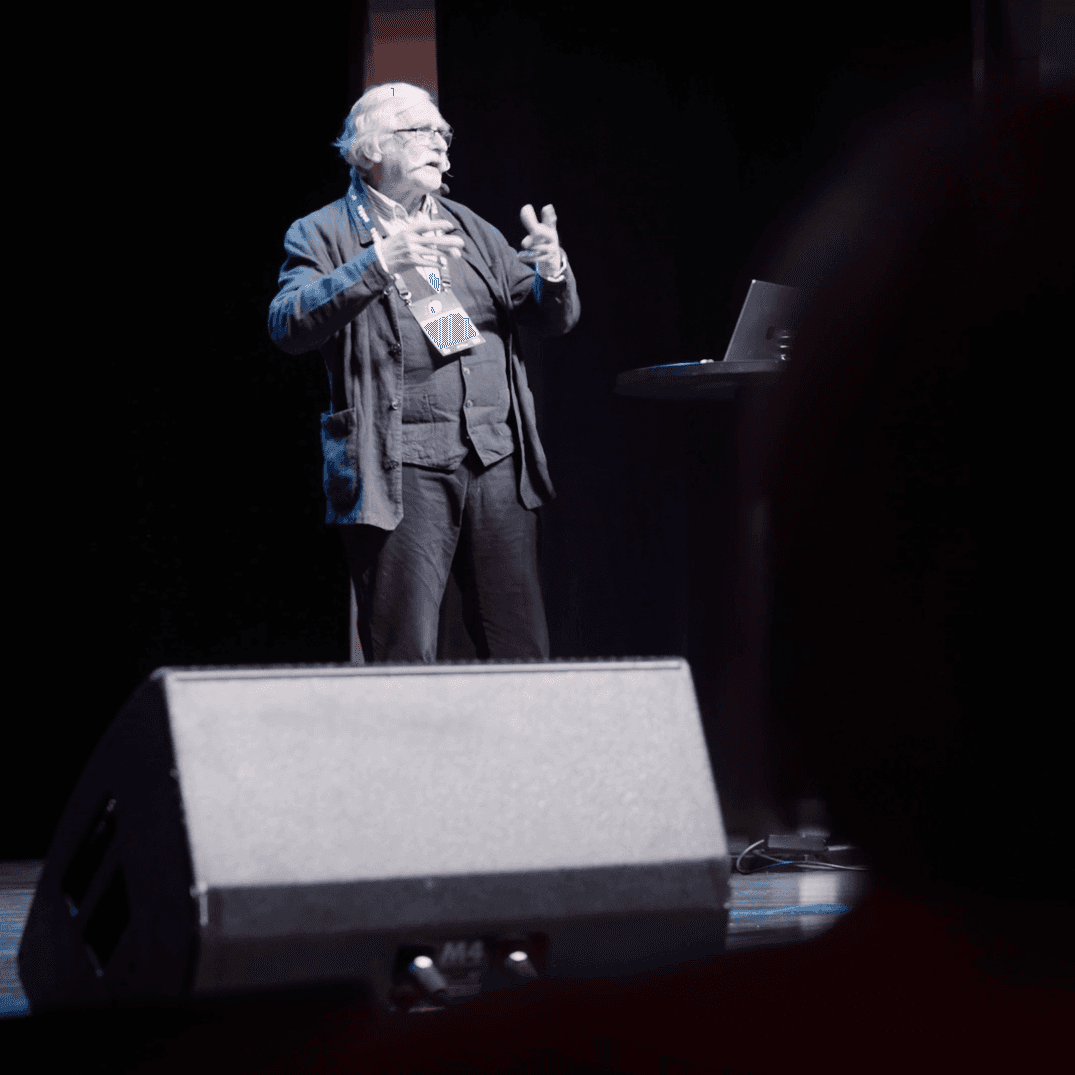
What if we’ve been studying the body the wrong way?
The Living Body: It’s time to talk about Fascia is a documentary about fascia — the body’s most overlooked tissue — and about the researchers, surgeons and others who believe we need to understand the body as a living system, not as separate parts.
Watch the full film here.
Pelvic floor dysfunction — what the research shows
- 1 in 2
women affected at some point in life
Socialstyrelsen, 2025 - 60 %
of UK women have at least one symptom
RCOG, 2023 - 39 %
never sought help — assumed symptoms were normal
RCOG, 2023 - 1 in 10
women will need surgery for prolapse
NICE NG123/NG210
Sweden published its first national guidelines for pelvic floor dysfunction in June 2025 — a condition that has affected millions of women for a long time.
An international research group proposed in January 2025 in the Journal of Anatomy that fascia be recognised as a distinct anatomical system — comparable to the cardiovascular system. The work was supported by the NIH.
The Japanese government has established a national fascia committee and written fascia into its 30-year national health vision.
The share of global research targeted at women-specific health conditions is not proportional to the disease burden — documented in repeated international reviews of research funding.
The Living Body
Premiered 4 June 2026. The Fascia Guide.
If you do one thing — share it
The short version is 3:20. Share it with someone you think of when you watch it.
Short film — 3:20
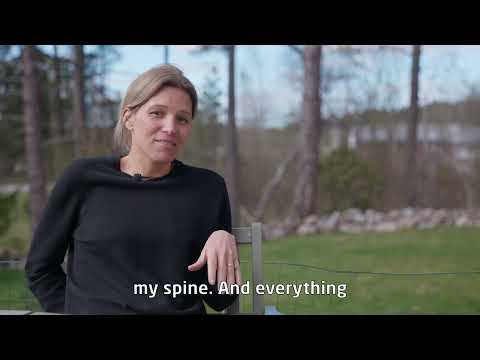
Seven years of pain, and a way out that had existed all along
After a difficult birth, Sanna developed pelvic floor cramping that worsened over years, until she could no longer eat or use the toilet normally. She was told her only remaining option was a stoma — and that she needn’t come back to care. After fascia treatment, her symptoms resolved.
“You’re not supposed to be in constant pain just because you gave birth in Sweden.”
Her account is one person’s experience, not clinical evidence. But it is the kind of story the film argues is far too common.
The Fascia Guide
The Fascia Guide is a knowledge platform on fascia, with articles, a research database, a podcast and the documentary The Living Body. Behind it is a team that has worked for over a decade to make fascia research accessible to the public — and that also develops and provides fascia treatment. The team organised the first Swedish Fascia Convention in 2025.
Screener, press images and contact
We are happy to provide a screener, press images and access to contributors.
- The full documentary and short film are above.
- Sanna is available for interview; her full name will be provided on request.
- Torkel Lassen appears in the film under his full name.
- Screener and press images: on request.
Socialstyrelsen (18 June 2025) · Royal College of Obstetricians and Gynaecologists (2023) · NICE NG123 / NG210 · Journal of Anatomy, DOI: 10.1111/joa.14212 (Jan 2025) · Mirin AA, Journal of Women’s Health 30(7), 2021 · NHS England, Perinatal Pelvic Health Services